No Stigma! -
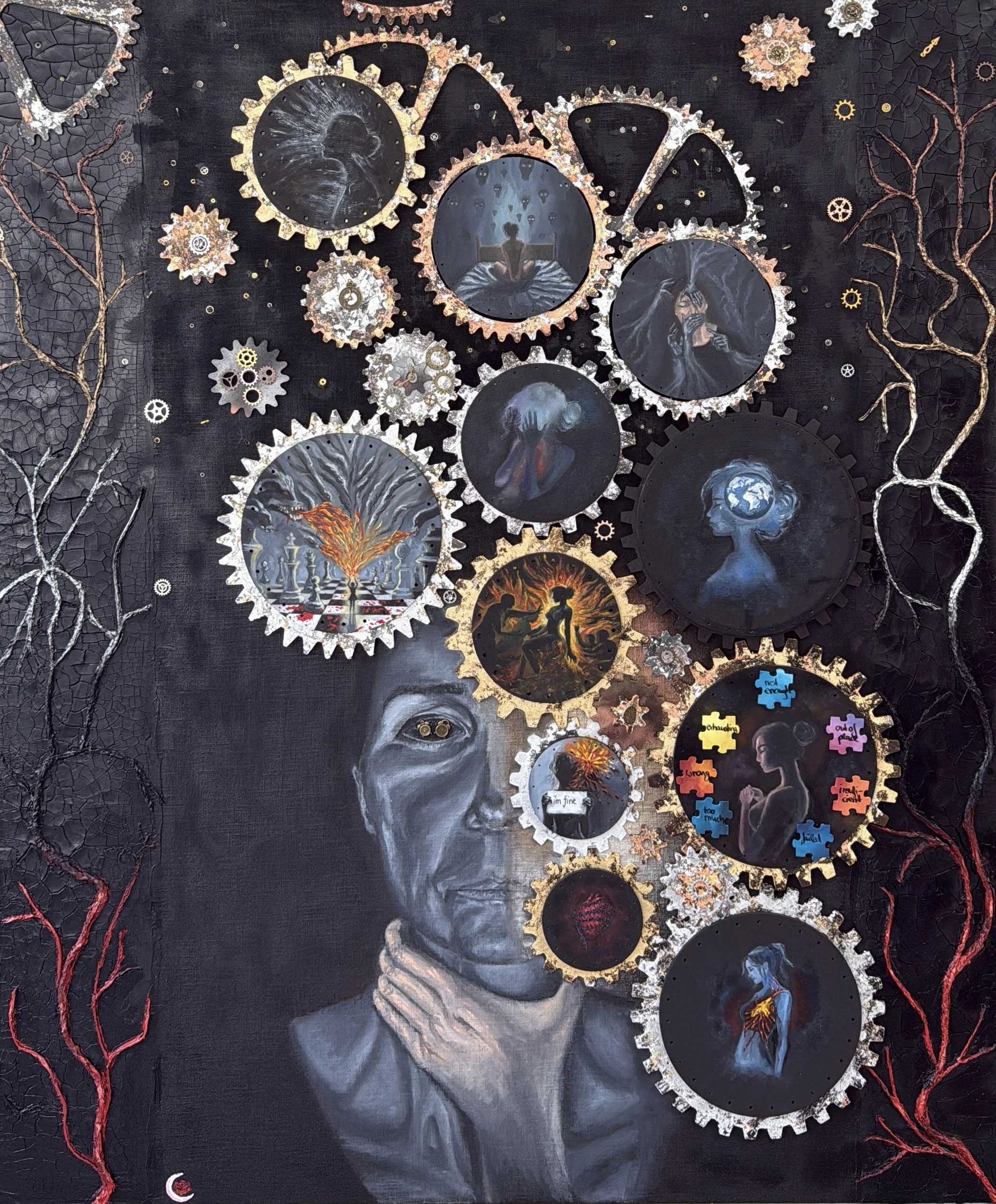
Silent Implosion
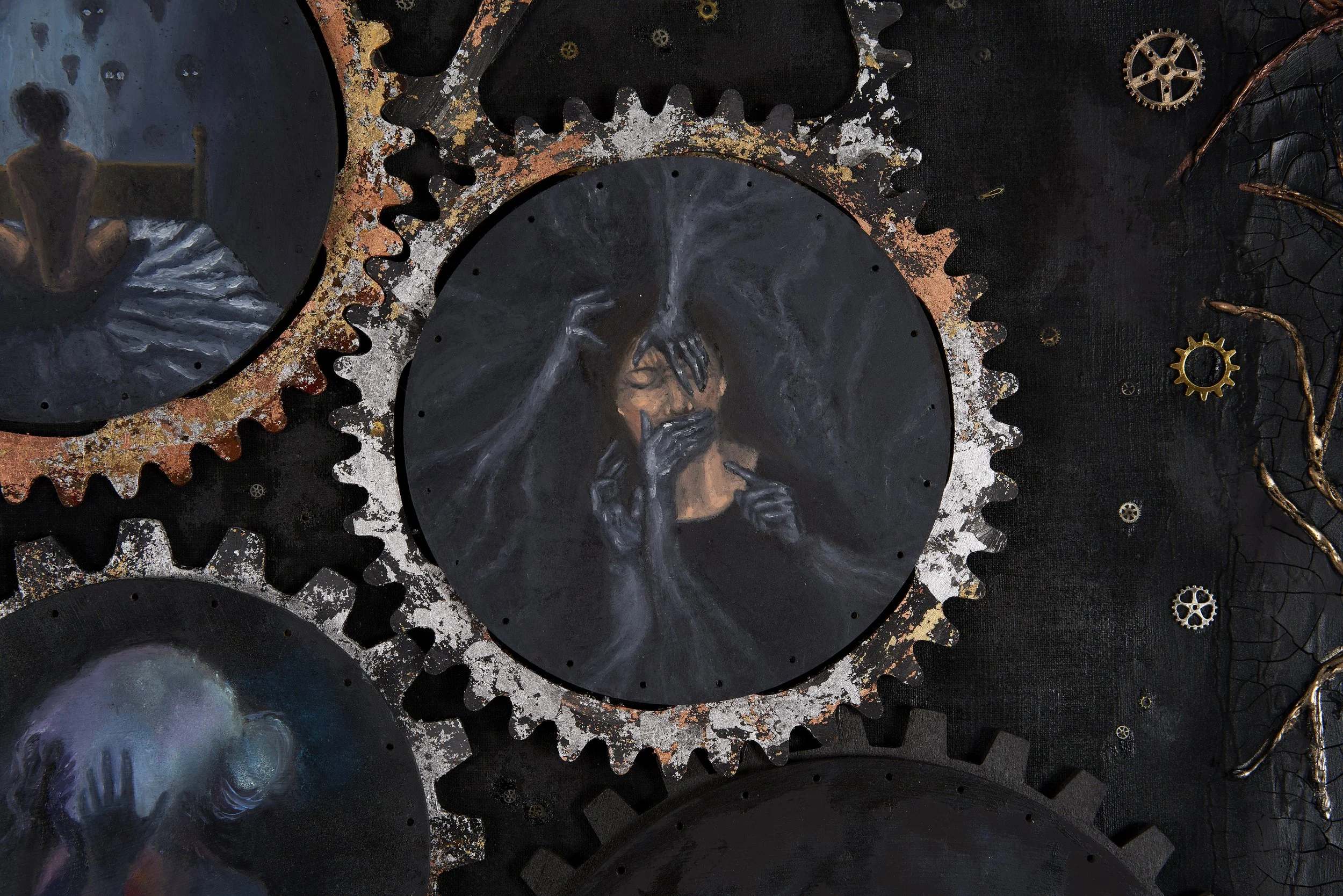
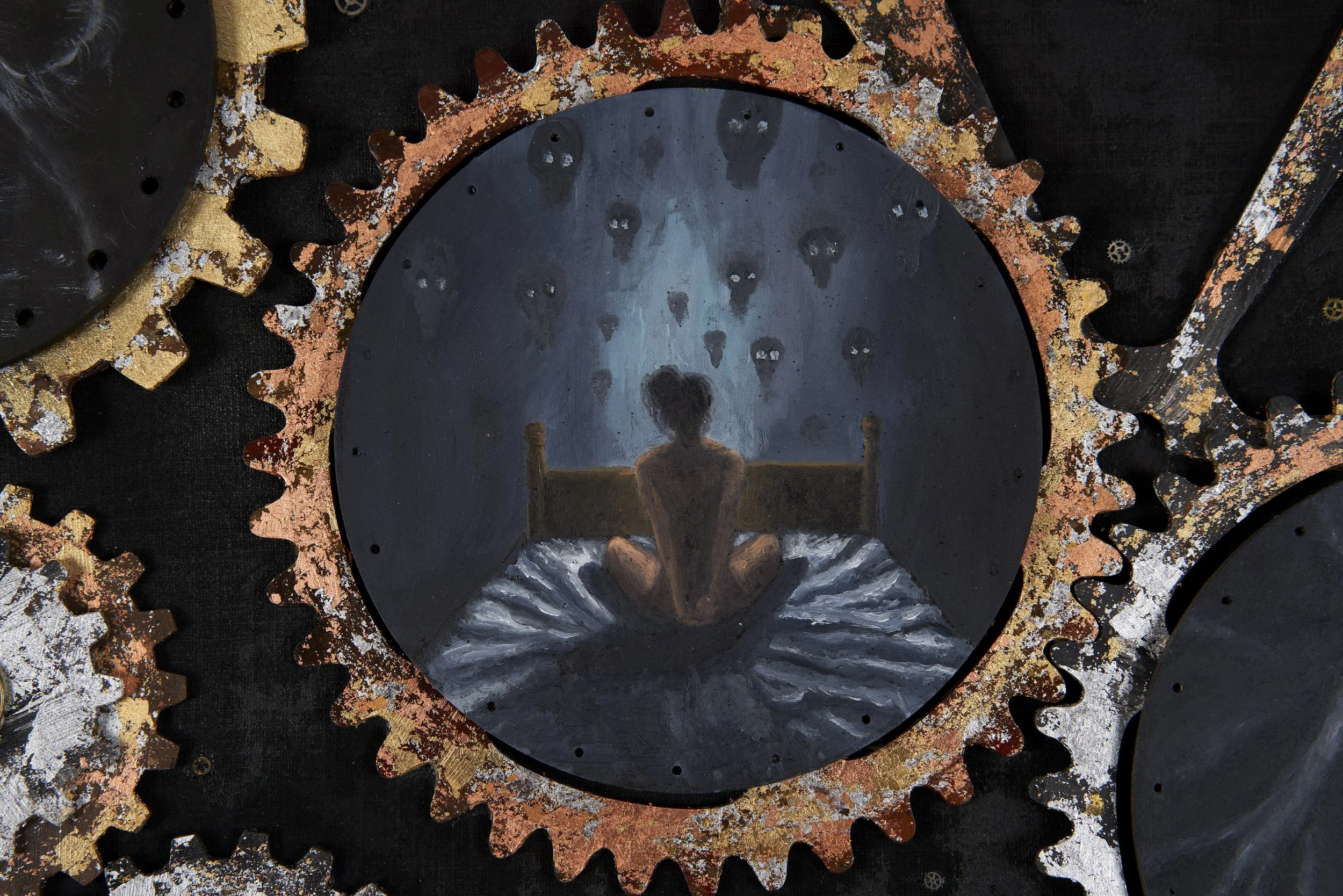
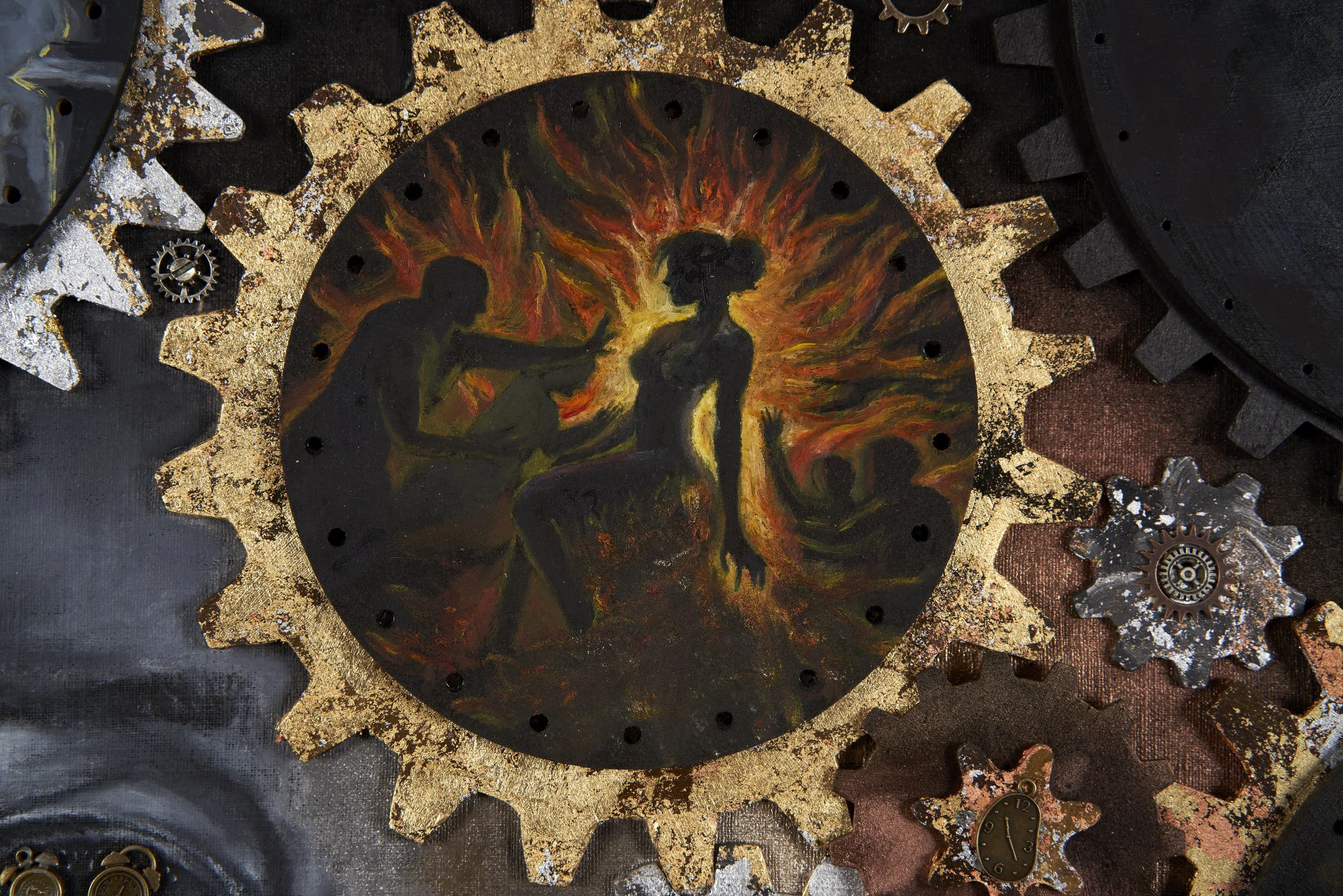
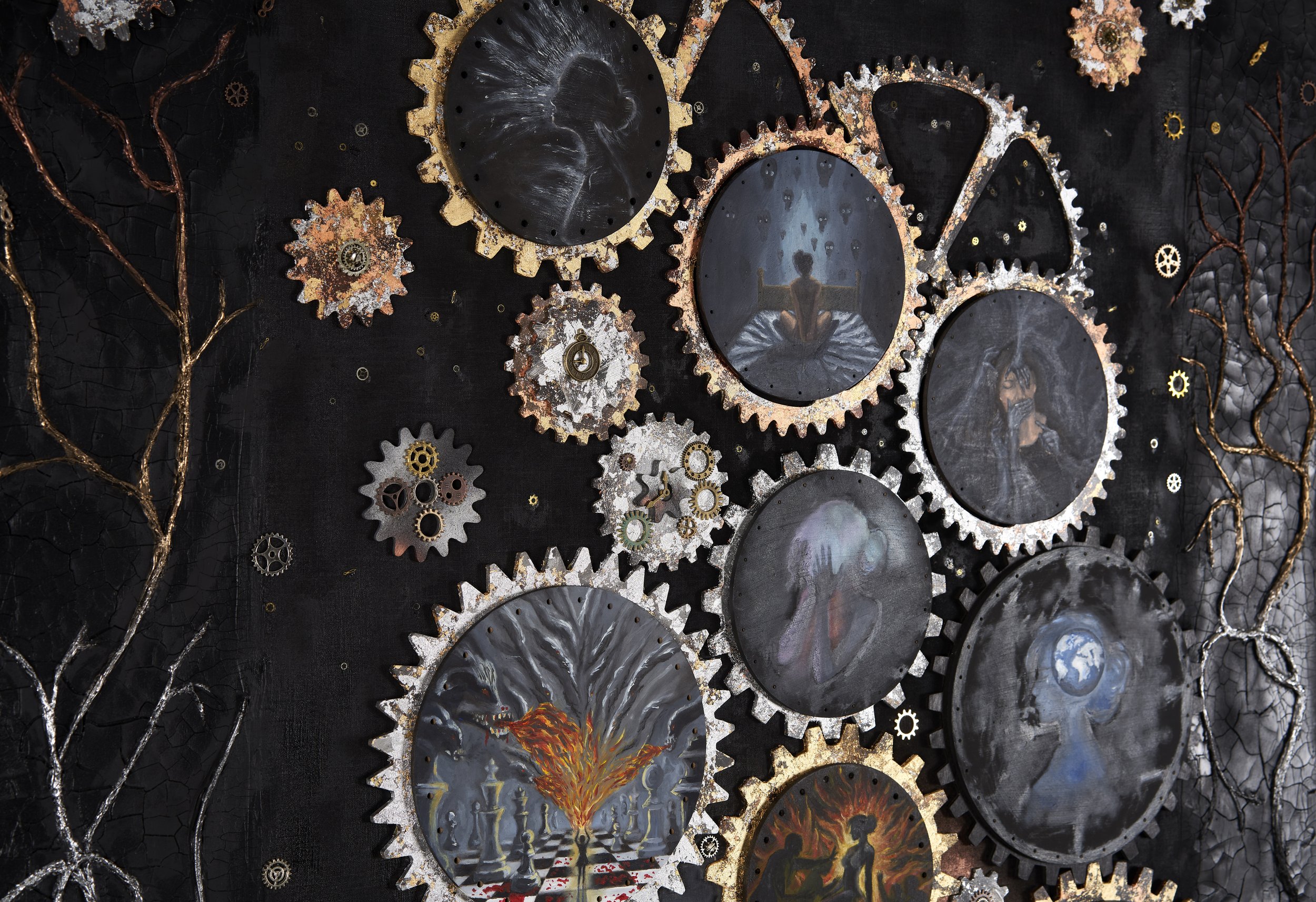
This work explores the inner realities of neurodivergent individuals living under constant social pressure to adapt.
The interlocking gears symbolize rigid societal systems and expectations that continue to turn while emotional overload, fragmentation, and silent exhaustion unfold beneath the surface. Through layered imagery and fragmented inner worlds, the work reflects themes of masking, invisibility, and the tension between external functioning and internal collapse.
Rooted in personal experience and shaped by the perspective of being a mother of neurodivergent children, the piece examines subtle forms of exclusion and the emotional cost of existing within normalized structures.
At the same time, the work points toward the possibility of transformation: not through pity,
but through empathy, perspective shifts, and lived inclusion — creating spaces in which difference no longer needs to remain hidden.
The Weight of
the Hunt
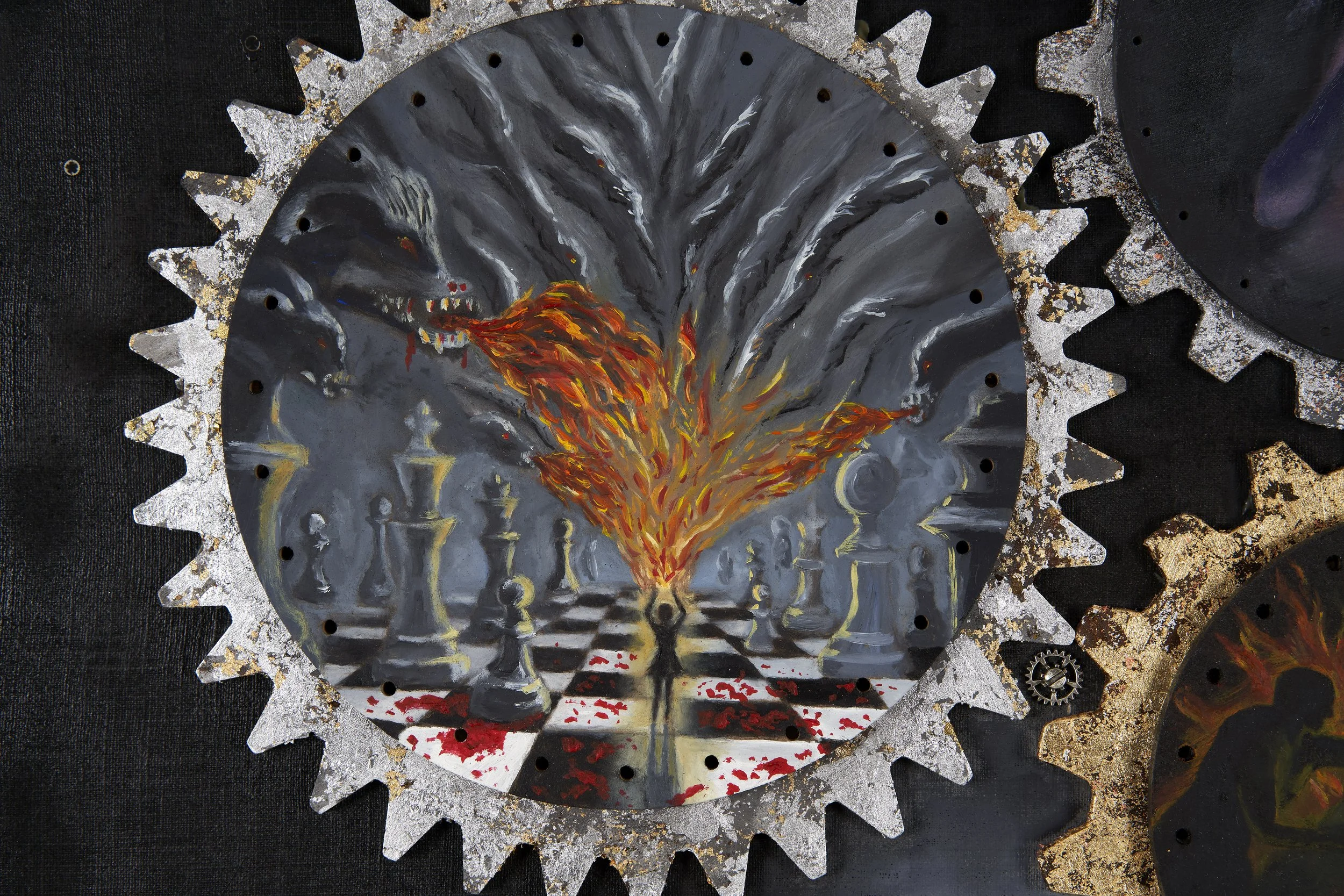
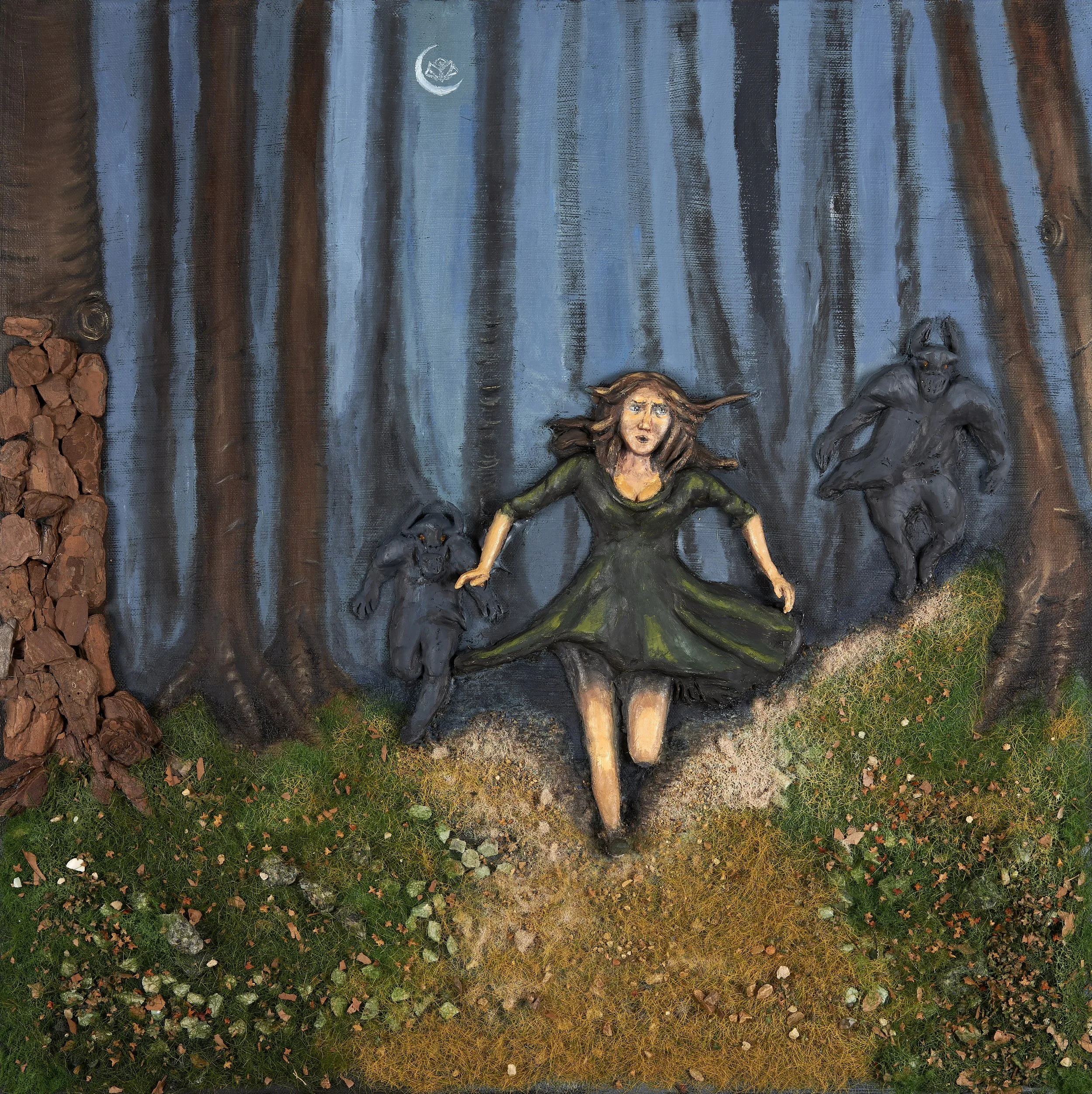
This work emerged from experiences of emotional exclusion, constant scrutiny, and the feeling of becoming the target of collective rejection.
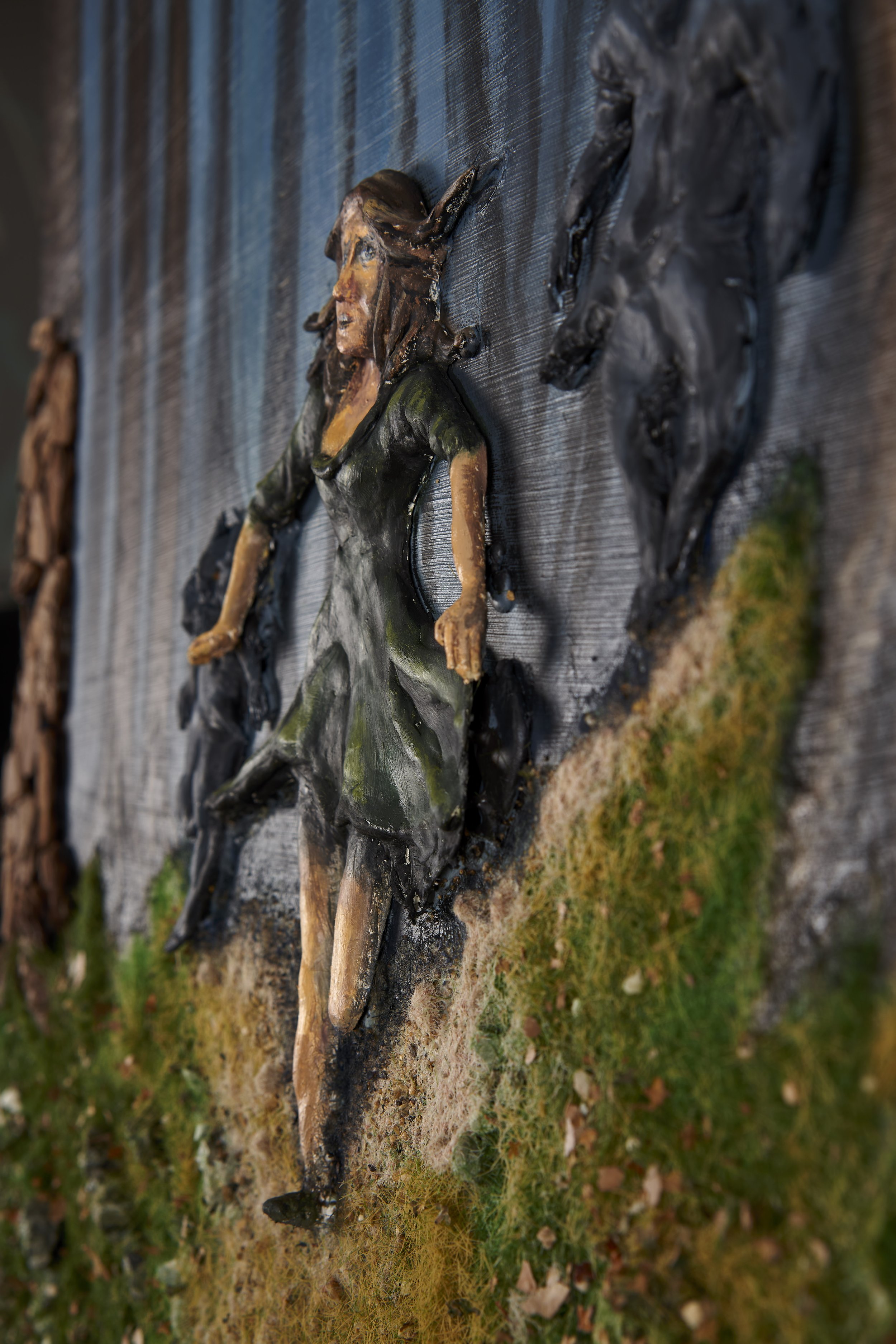
The central figure moves through a dark forest space between flight, fear, and inner resistance, pursued by deformed, almost soulless entities. They embody social dynamics of manipulation, dehumanization, and the loss of compassion within a group.
The forest condenses into a psychological space of permanent alertness, where threat remains constantly present. Despite exhaustion, the movement of the figure conveys a deep instinct for survival — an attempt to preserve identity and dignity against emotional destruction.
The work explores the emotional burden of being hunted and the psychological consequences of ongoing social threat, in which fear, mistrust, and inner hypervigilance can become a permanent state.
From Shadow
into Light
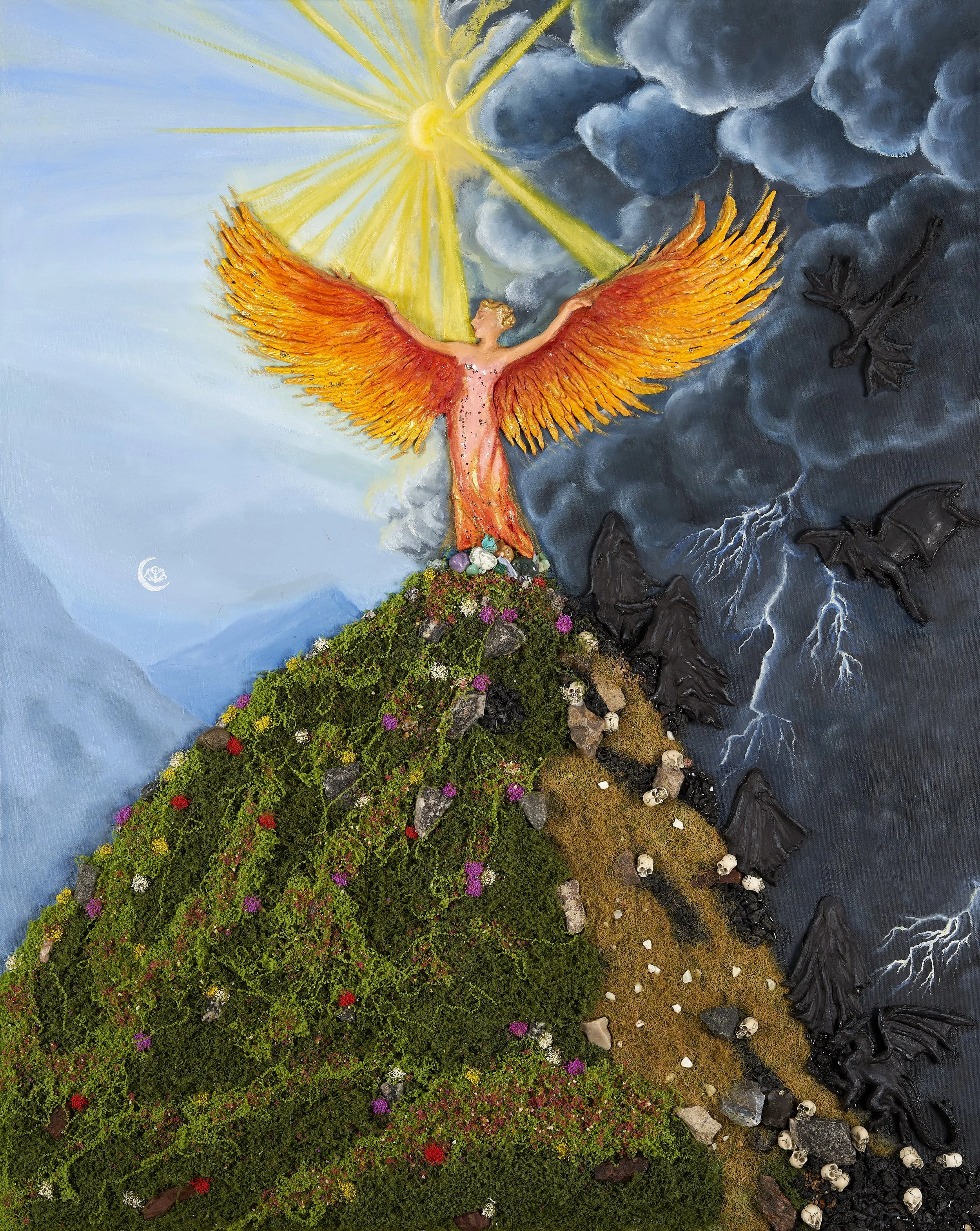
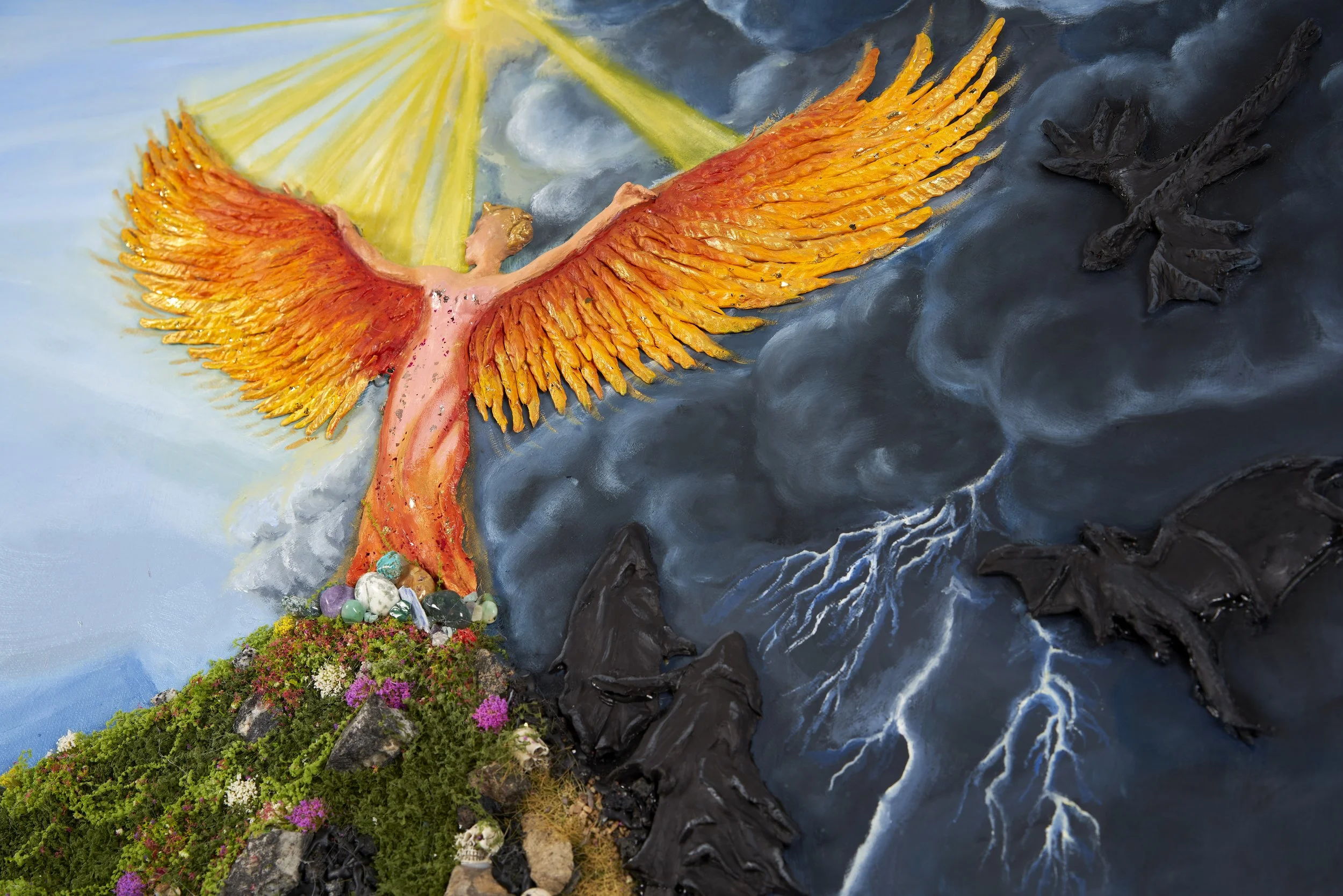
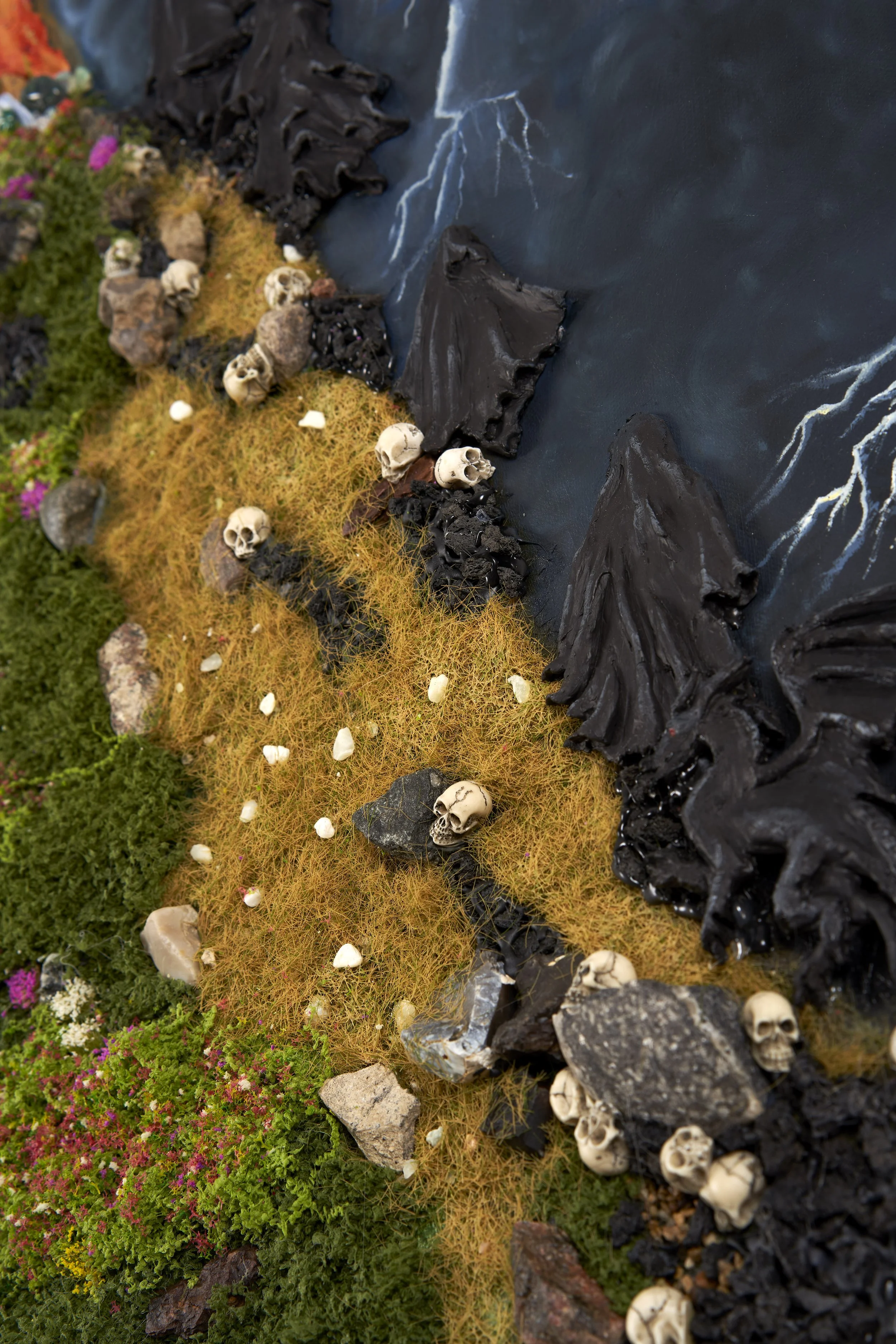
This work explores transformation, inner resilience, and the process of rising again after emotional wounds and periods of deep exhaustion.
The phoenix appears as a symbol of change, self-empowerment, and the reclaiming of an inner identity that could not be entirely destroyed despite social devaluation and personal crises.
The relief-like mountain refers to a long and often painful journey through isolation, overwhelm, and inner darkness. The black figures, storm-like structures, and falling forms symbolize destructive influences, fear, and the weight of social exclusion, while light and organic elements open a counter-space of hope, growth, and possibility.
At its core, the work is not about sudden redemption, but about healing as a conscious and ongoing process — a decision to turn toward the light despite experienced wounds and to reclaim one’s own voice.
Between Paralysis
and Emergency
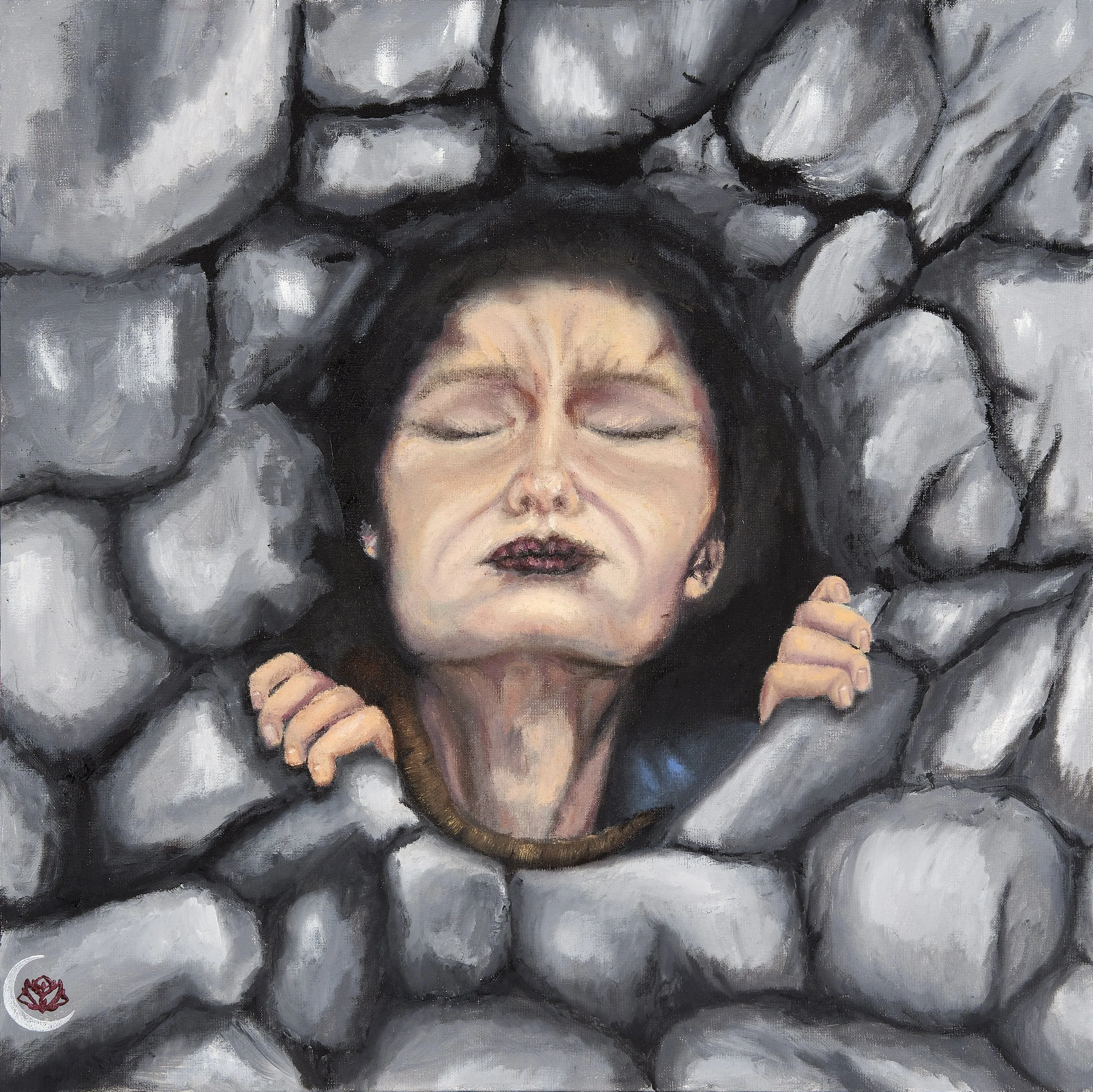
This work explores the state of emotional and psychological paralysis alongside the simultaneous inner desire for liberation and change.
The central figure appears enclosed by massive, stone-like structures that symbolize inner burden, overwhelm, fear, and the feeling of emotional hopelessness. The confined pictorial space intensifies the sense of pressure, isolation, and the painful experience of inner constriction.
Despite the visible exhaustion, a physical tension remains perceptible within the figure's expression.
The hands seem to push against the enclosing structures, while posture and facial features oscillate between resignation, pain, and silent resistance. This creates an ambivalent state between inner collapse and the attempt not to surrender completely to paralysis.
The reduced, almost monochromatic palette reinforces the feeling of emotional emptiness and restricted mobility. At the same time, the work points toward the fragile possibility of transformation - even in places where hope seems barely reachable.
The image examines the psychological space between stagnation and emergence, between the for healing and the feeling of remaining trapped within one's own pain.
Between Protection and Paralysis
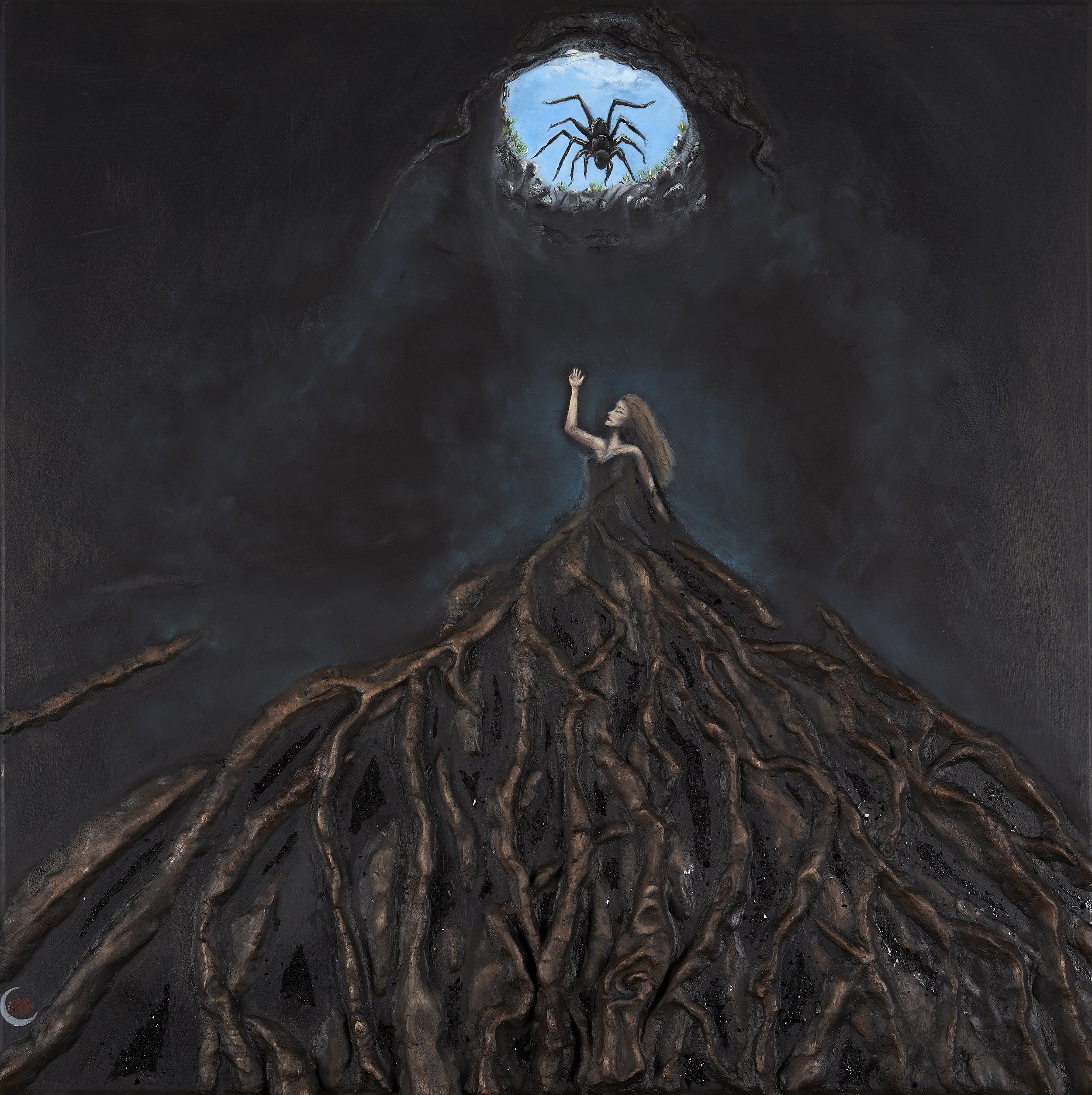
This work explores the tension between protection, vulnerability, and inner paralysis.
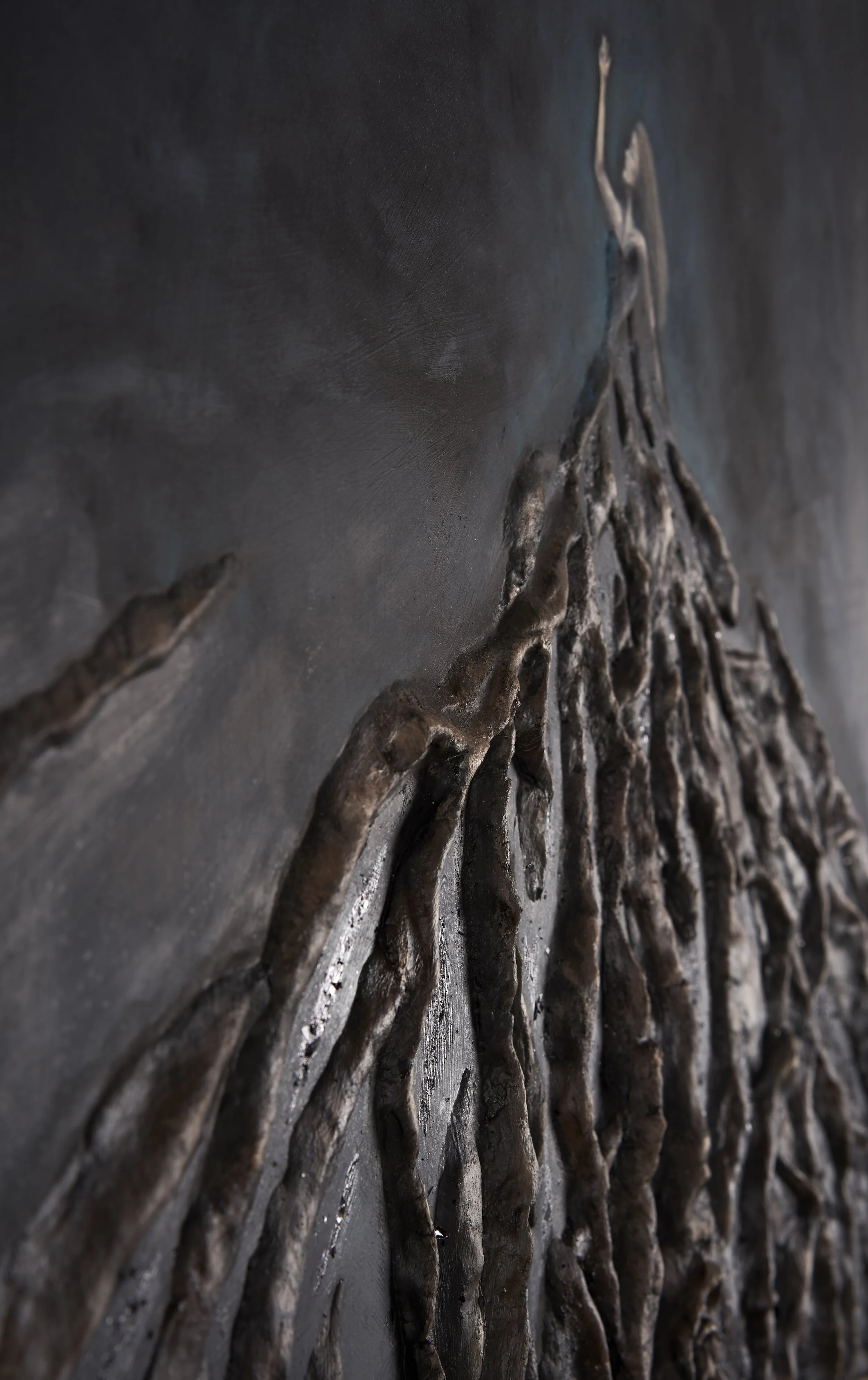
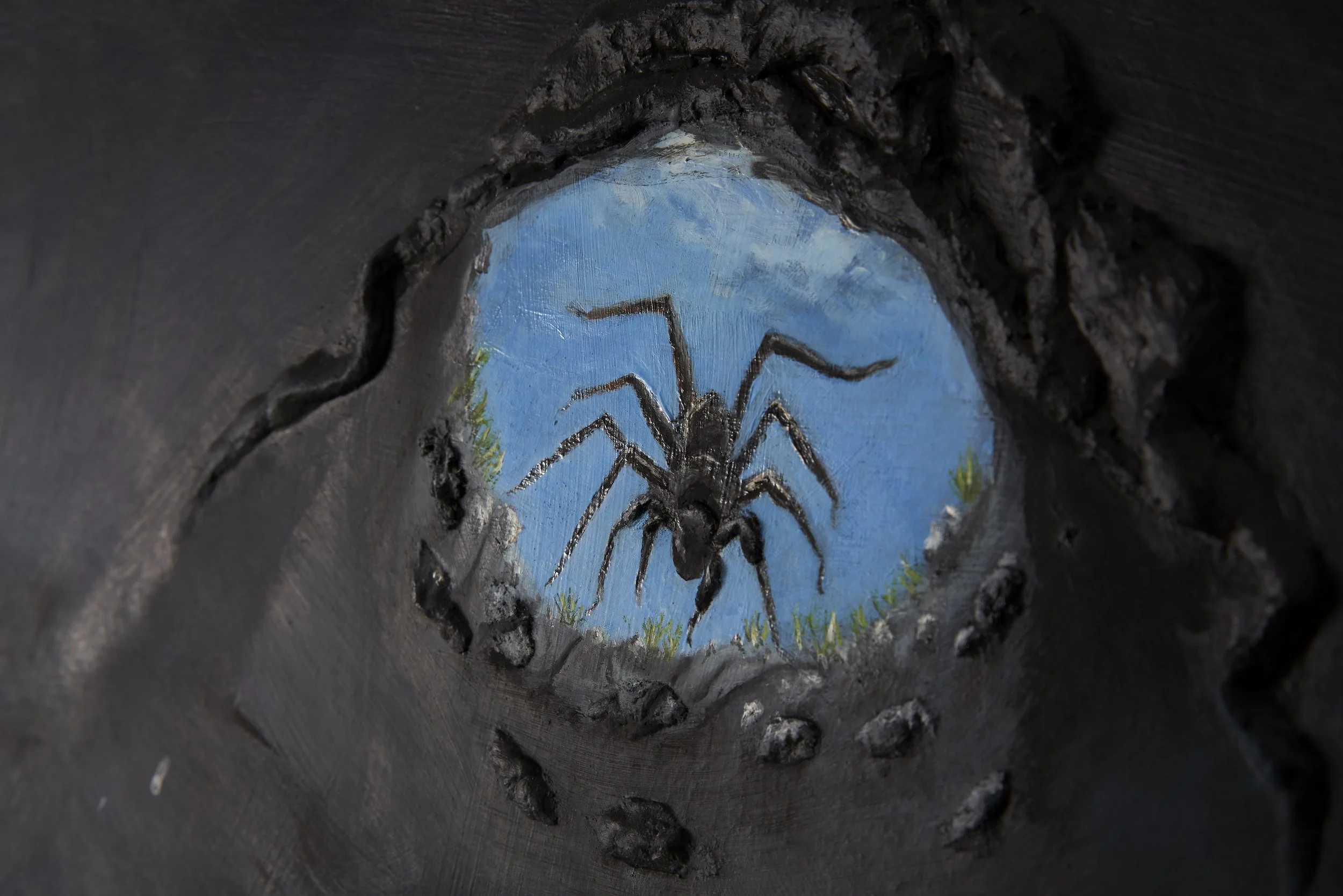
The central figure appears intertwined with a far-reaching root system that simultaneously embodies support and limitation. The relief-like structures symbolize protective mechanisms that can emerge from repeated overwhelm, fear, and emotional vulnerability. What was once meant to create safety gradually transforms into isolation and restricted movement.
The opening in the upper part of the composition points toward the possibility of change and liberation, yet remains deliberately ambiguous. The spider visible within it symbolizes underlying threat, uncertainty, and the difficulty of developing trust in new experiences.
Between darkness and fragile light, the work examines the psychological consequences of constant inner alertness as well as the complex dynamic between the need for protection and the desire for self-development. At the same time, it reflects the intensity of inner processing potential dangers and emotional risks are continuously anticipated.
The Price of Belonging
This work emerged from an experience that left behind not so much a wound as a fundamental question:
Why do people act against their own convictions, even when they know that, in doing so, they surrender a part of themselves?
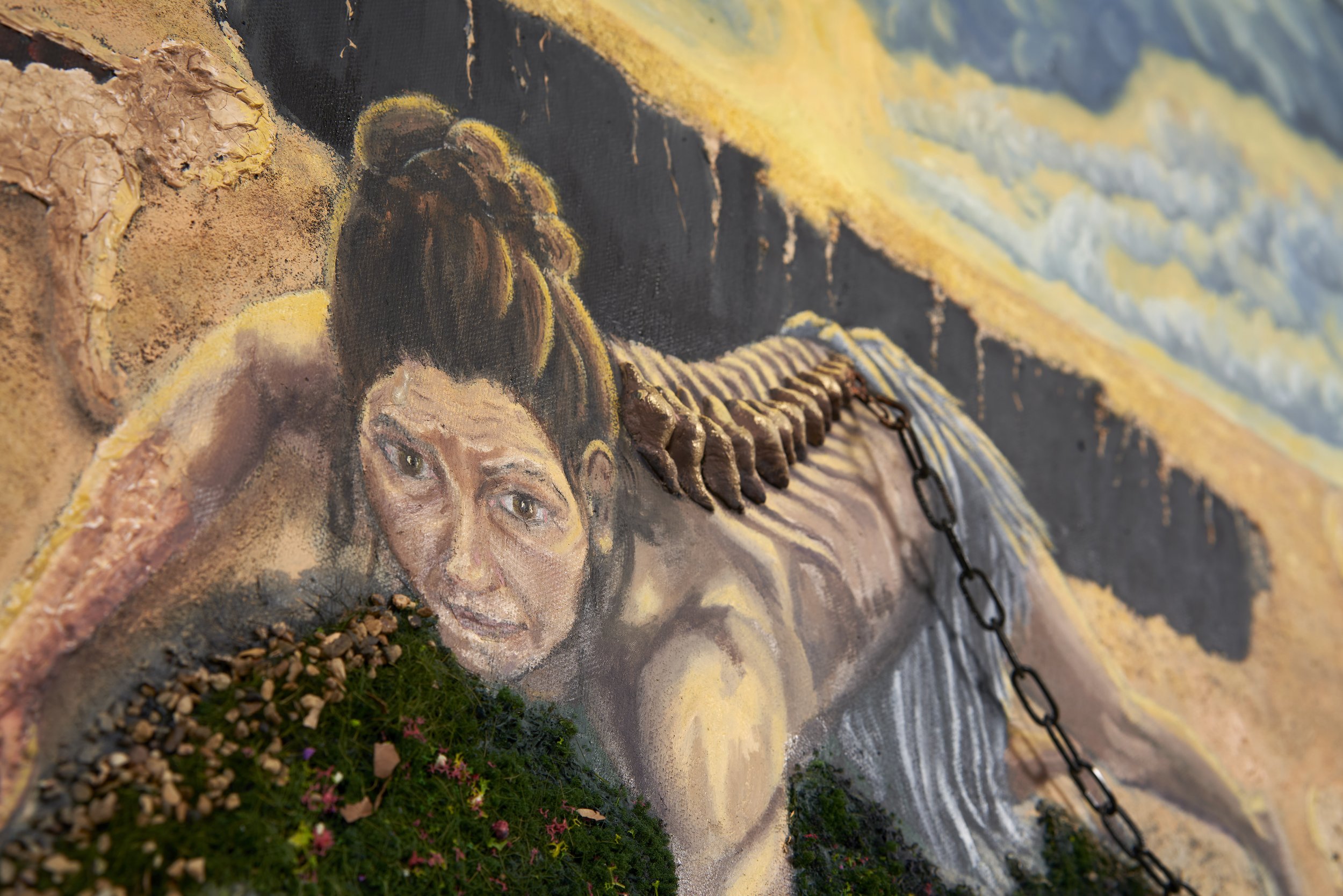
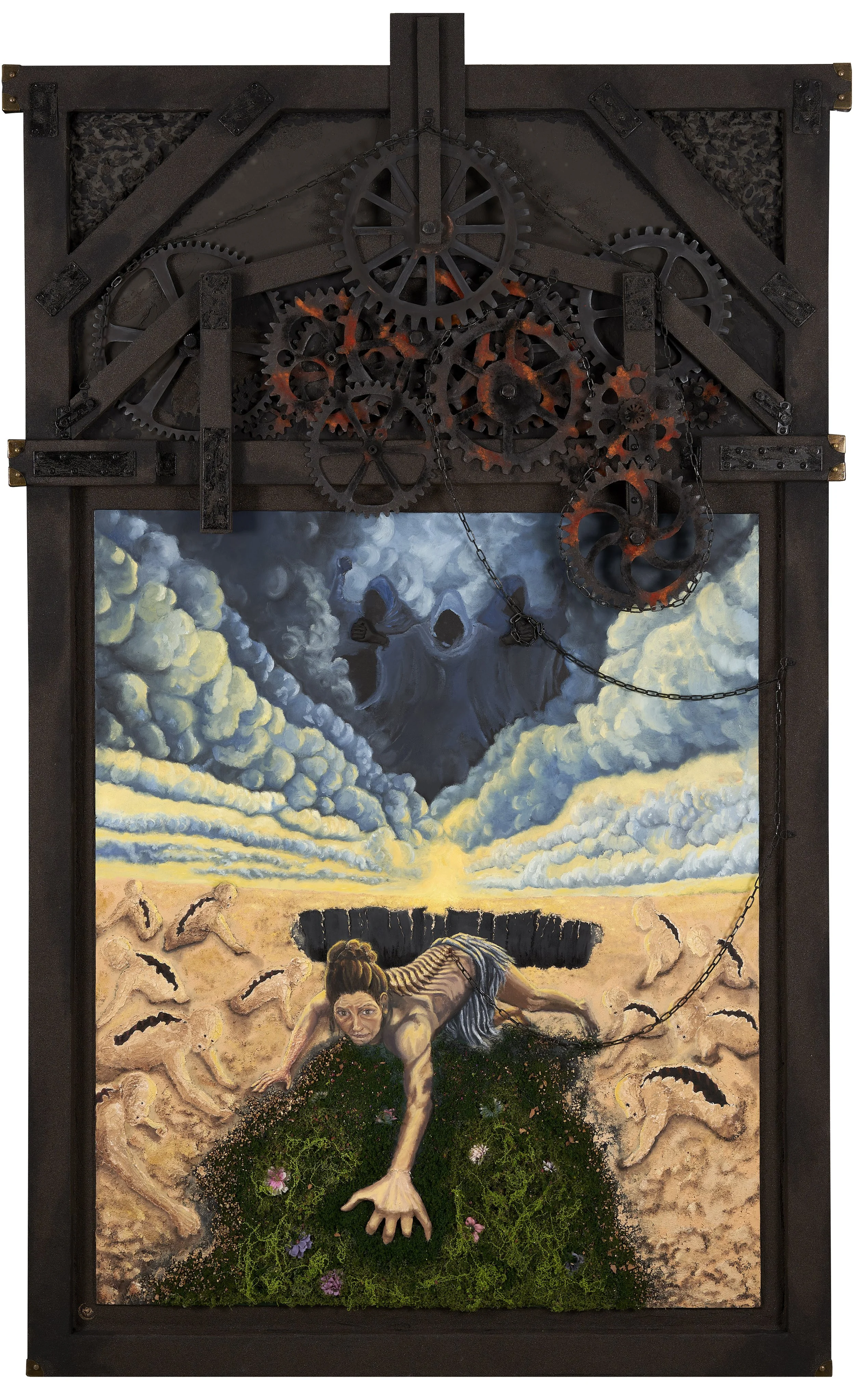
From this question evolved an exploration of belonging, exclusion, and the often invisible mechanisms of social conformity. At its core are not individual people, but the dynamics that arise when the fear of exclusion becomes greater than loyalty to one's own inner convictions.
Painting, sculptural elements, and the frame itself form a unified visual space in which boundary, object, and narrative become inseparably intertwined. Organic forms encounter industrial structures; growth confronts control; vitality meets rigidity. The central figure exists in a state of transition-not between winners and losers, but between conformity and authenticity. The moment of departure is presented not as a triumph, but as the quiet cost of a decisive choice.
The Price of Belonging is intended neither as an accusation nor as an answer. Instead, it invites reflection on a universal human experience:
How much of ourselves are we willing to sacrifice in order to belong-and what becomes possible when someone finds the courage to be the first to leave?
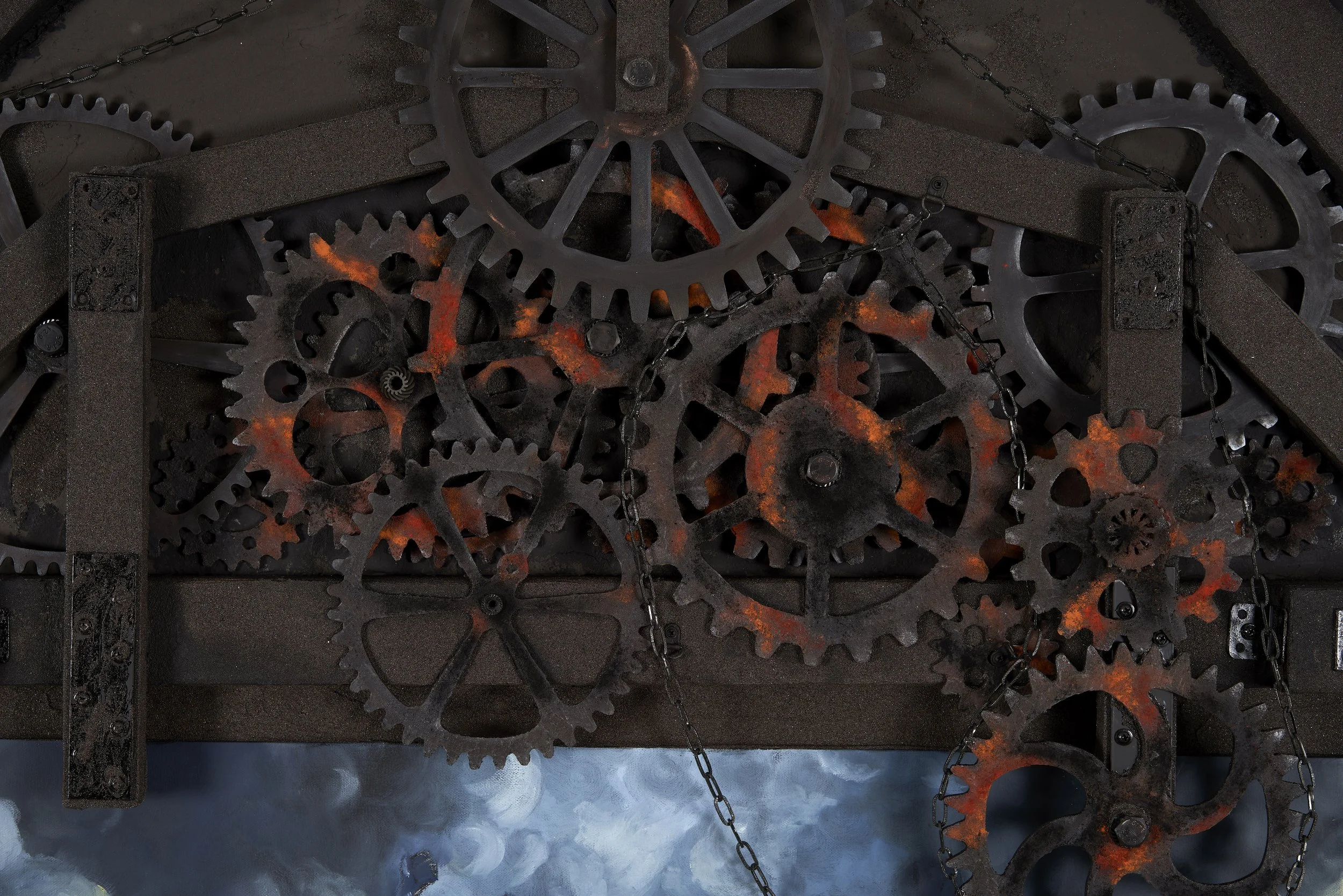
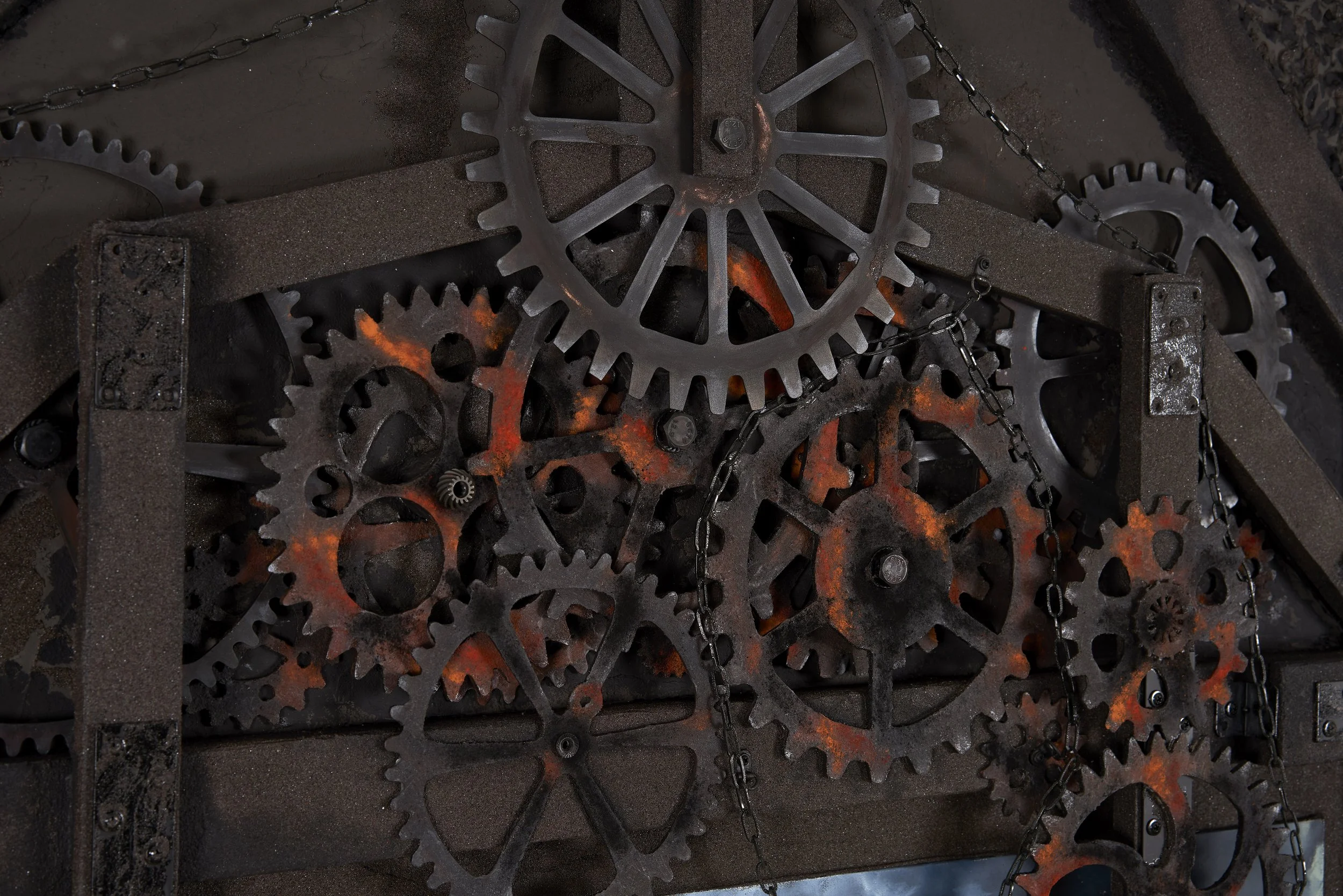
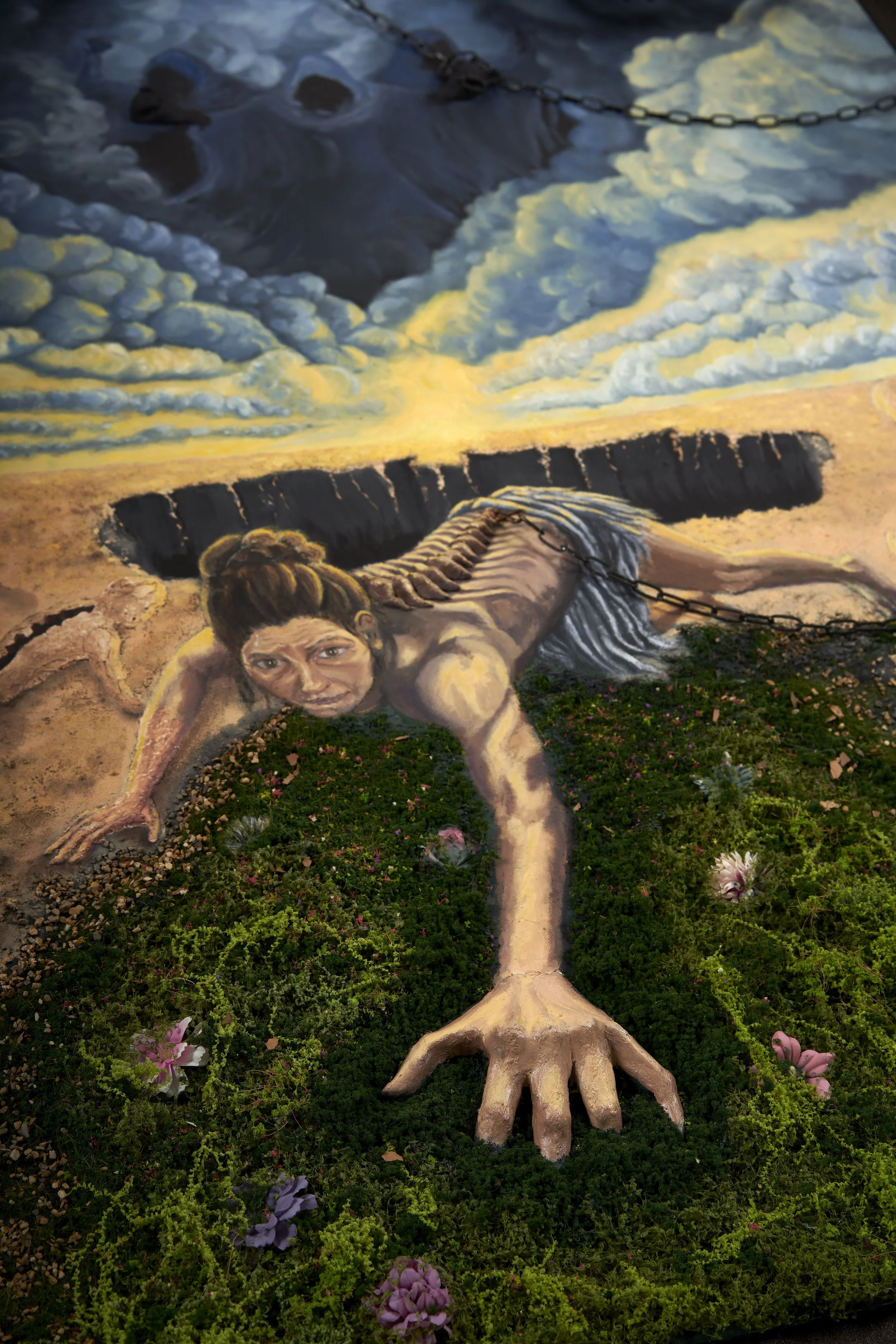
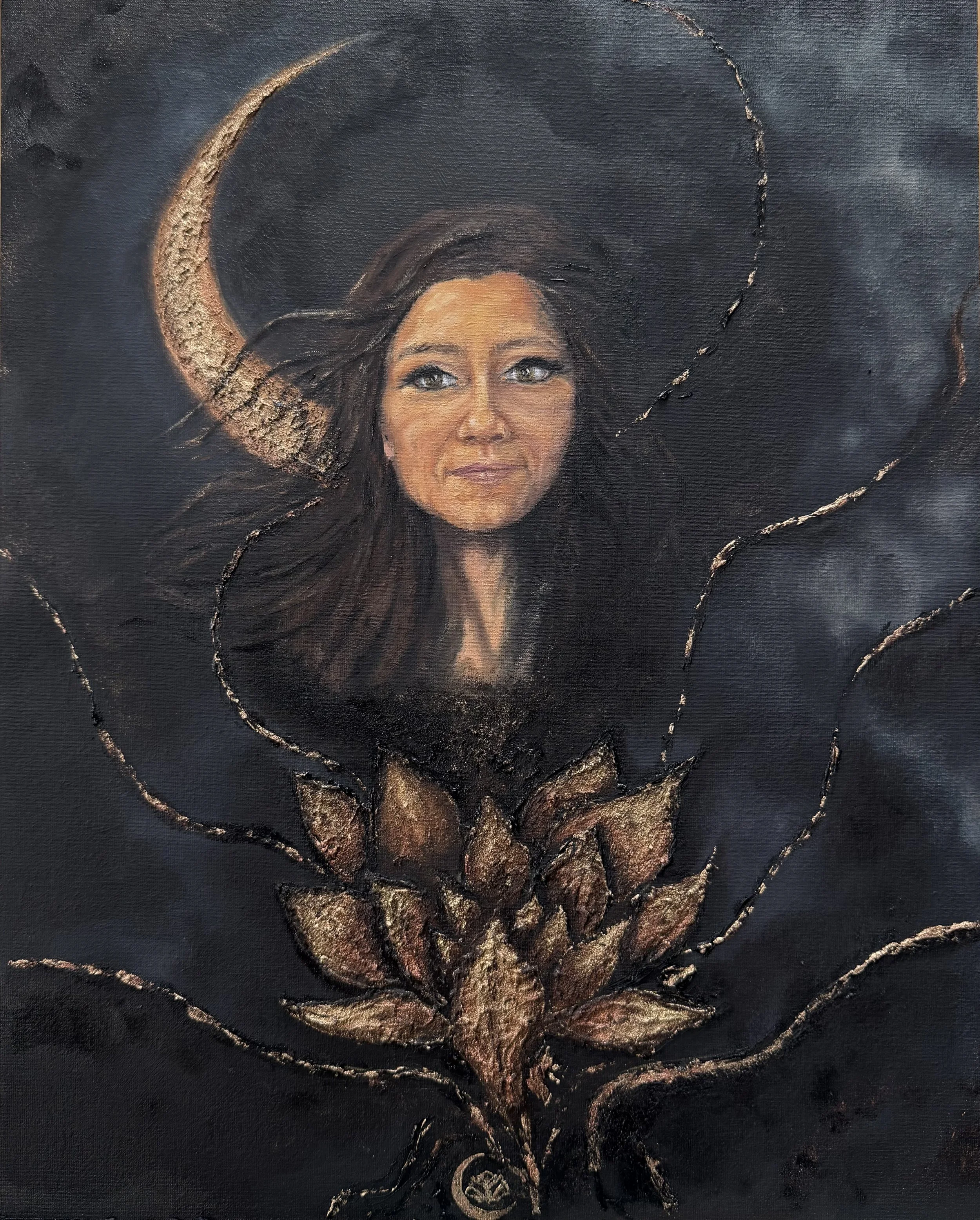
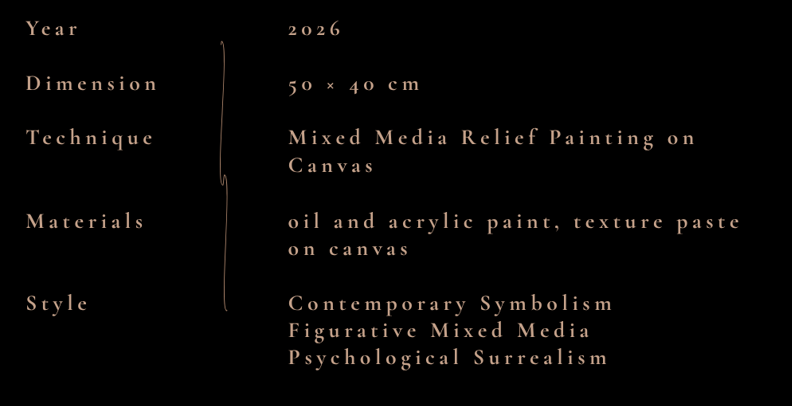
Hilal from Moon and Ashes
This work marks the beginning of my artistic exploration of identity, belonging, and inner transformation. It does not speak of a beginning, but of the moment when something becomes visible that has already passed through darkness, loss, and change.
At its center stands a female figure suspended between light and shadow. She appears both vulnerable and resilient, as though emerging from an inner realm shaped by memory, lived experience, and emotional struggle. The dark surrounding space represents those invisible psychological landscapes where identity takes form-where doubt, hope, pain, and self-discovery converge.
The crescent moon refers to my given name, Hilal, which means "waxing crescent moon." It symbolizes growth, renewal, and the ability to re-emerge after periods of darkness. Rather than functioning as an external attribute, the moon is inseparable from the figure itself - a metaphor for an identity that continually evolves without abandoning the experiences that have shaped it.
Emerging from the darkness, the blossoming form becomes the emotional core of the work. It appears as something born from ashes-marked by the traces of past experiences while simultaneously carrying the promise of renewal. It symbolizes transformation: the human capacity not merely to endure exclusion, loss, uncertainty, and emotional fracture, but to transform them into dignity, insight, and self-determination.
Golden lines traverse the composition like visible memories. They connect the figure, the moon, and the blossom, tracing the paths a person travels throughout life. They represent scars, transitions, and lived experiences that are neither concealed nor erased, but remain inseparable from one's personal history. What has been broken does not disappear: it becomes integrated into identity itself.
Hilal from Moon and Ashes is not intended as a conventional self-portrait. Instead, it exists between personal experience and universal symbolism. It reflects on those who search for their place in a world where belonging is often conditioned by conformity, while confronting the challenge of preserving dignity in the face of rejection and exclusion.
Ultimately, the work speaks of an identity that exists not despite its fractures, but because of them. It is about the capacity not to recover what has been lost, but to create something new from it. Above all, it speaks of the quiet strength to step back into the light after periods of darkness-not unchanged, but transformed.